You Can Automate the Email. You Cannot Automate Trust.
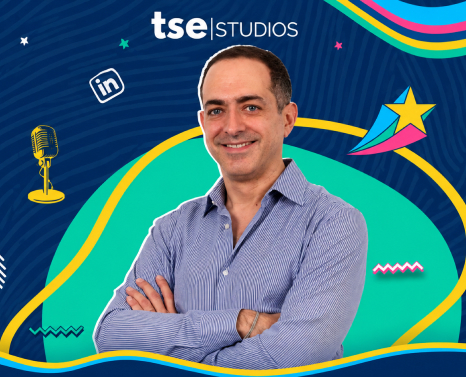
On The Sales Evangelist podcast, Covve CEO Yiannis Gavrielides made the case that as outreach gets automated, the trade show floor is quietly becoming the most valuable room in sales.
We have reached the strange point where almost everything about sales outreach can be handed to a machine. The email writes itself. The meeting books itself. A call can very nearly run itself. So here is the uncomfortable question that follows: if a piece of work can be automated, how much is it really worth anymore?
Yiannis Gavrielides, cofounder and CEO of Covve, put the answer plainly on a recent episode of The Sales Evangelist podcast with Donald Kelly. You can automate the email, you can automate the booking, you can nearly automate the call. What you cannot automate is trust. And once you accept that, the whole geography of selling shifts. The thing the machines cannot touch becomes the thing worth the most, and right now that thing is sitting across a table from someone at a trade show.
The inbox is noise. The room is signal.
Every salesperson already knows the feeling from the receiving end. The inbox has become a wall of outreach so automated and so interchangeable that the natural response is to ignore almost all of it. The more effortless it became to send, the less any single message came to mean.
While digital outreach quietly devalued itself, the opposite happened in person. The data has caught up with the instinct: in a 2025 study of 198 B2B software companies, 52% of marketers attributed at least half of their closed deals that year to events. The room, it turns out, is where the trust gets built, and the trust is where the deals come from.
Gavrielides argues this is not a nostalgic return to the old way of doing things. It is a rational response to scarcity. When a genuine human signal becomes rare, it becomes precious. The handshake is valuable now precisely because the inbox is not.
We are wired to look for what we share
The reason a face-to-face meeting works is not mystical, and Gavrielides reaches for science to explain it. On the show, he cites the work of Robin Dunbar, the Oxford anthropologist behind Dunbar's number, who has spent decades studying how humans actually form bonds.
Dunbar's research describes what he calls the seven pillars of friendship: language or dialect, where you grew up, your education and career path, your hobbies, your worldview, your taste in music, and your sense of humour. When we meet someone, we instantly and almost unconsciously scan for these shared signals. The more of them we have in common, the faster trust forms, and the stronger the bond becomes.
This is the quiet engine running underneath every good conversation at a booth. The accent you both recognise, the city you both lived in, the joke that lands the same way for both of you. None of it can be faked by a templated message, and all of it is available the moment two people actually talk.
Forget the sale. Look at the person.
The practical mistake Gavrielides describes is one almost every salesperson has made, and it comes from good intentions. We are so fixated on the goal, the lead, the deal, the number, that we stop seeing the human in front of us. We arrive at a conversation already calculating, and the other person can feel it.
His prescription is to drop the calculation, at least for the length of the conversation. Get curious instead. Ask why they are there, what they are wrestling with, and where they are from. Offer something useful, an introduction, a piece of information, with no expectation attached. As he put it on the show:
“When we show up as human and treat the other person like a human being with curiosity and genuine interest, we start finding what we have in common. That’s what builds trust, and that trust can then grow into something more meaningful and useful.”
The counterintuitive part is that letting go of the sale is what makes the sale possible. A real connection does not expire when the conversation ends. Even if nothing comes of it directly, the person who felt genuinely seen will open your email later, or point you toward someone who needs what you offer. Connection first, business second, is not soft. It is simply the order in which trust actually works.
The work happens before you arrive
None of this means showing up and hoping for chemistry. The strongest argument Gavrielides makes is that a great trade show is mostly won before anyone sets foot on the floor. The preparation is the strategy.
Define exactly who you are trying to meet. Research shows where those people actually gather, and resist the temptation to chase the biggest event. A smaller show with a dense concentration of the right buyers and lighter competition will almost always beat a vast one where your ideal customer is a needle in a haystack. Then go deeper still: study the attendee and speaker lists, learn a little about the people who fit, and reach out beforehand with a genuine, handwritten note, not to sell, but to exchange views over a coffee. The aim is to walk in with ten to twenty real conversations already on the calendar.
Then comes the part everyone neglects. The lead is not the contact details, Gavrielides insists. The lead is the connection and the context around it: what you bonded over, what they are struggling with, what you agreed to do next. That context has a brutally short shelf life. By Monday morning, the faces have blurred, and the details are gone, which is why so many promising conversations quietly die in the days after an event. Capturing the human texture of a conversation while it is still fresh, and following up quickly and personally, is what separates a memorable meeting from a forgotten one.
The larger point lands cleanly. As automation swallows more and more of the sales process, the advantage does not disappear; it relocates. It moves to the one place a machine cannot follow: two people in a room, finding what they have in common, and deciding to trust each other. The tools will keep getting better at everything that is not that. Which is exactly why everything that is that has never mattered more.