Fisto, Mekaneck, and the Art of Never Forgetting a Face
Spoilers ahead. Also: this film has a character called Fisto.
Somewhere in the new Masters of the Universe, Adam comes face to face with a villain during a fight at the rebel base. The villain's real name is Kronis. Adam has absolutely no idea about this. He looks at the mechanical jaw, runs a quick calculation, and politely addresses him as Mister Trap Jaw. Kronis, for the record, is completely fine with it. Teela and Duncan look like they want to leave the planet.
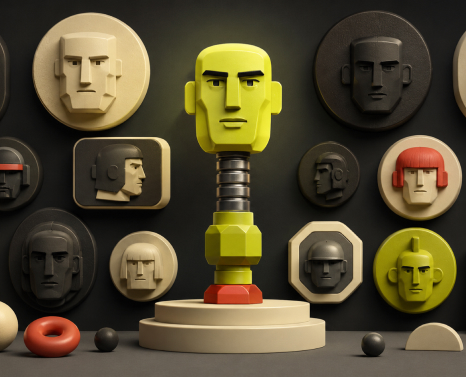
This is a running joke in the film, but it is also something more. Adam grew up on Earth, ripped away from Eternia at age ten, no family, no way back, and no one who believed a word he said about where he came from. What he had was a sketchbook. He drew everyone he remembered: the warriors, the allies, the people who shaped him before he understood who he was. And he gave each one a name, not a real Eternian name, just whatever detail about them had stuck most vividly in a child's head.
Hence: Fisto. Ram Man. Mekaneck. Mister Trap Jaw, applied in real time to a man trying to kill him.
The logic is completely sound if you are ten years old (and even older)
When Adam explains his naming system out loud, he is entirely unembarrassed, which makes it funnier. Ram Man charges everything head first like a battering ram. Of course he is Ram Man. Fisto has the giant fist. The reasoning is airtight. Mekaneck has the mechanical extending neck, and honestly what else were you going to call him.
By the final scene the full damage is revealed. Adam admits he had been calling Teela the Warrior Goddess for fifteen years. She does not love this. He also confesses that he named himself He-Man, which the whole room agrees is the most redundant thing anyone has ever done. Everyone around him hears silly labels.
What they are actually seeing is his private filing system, the one that kept every single one of them alive in his memory across a galaxy and a decade and a half of distance.
It turns out this is just good neuroscience
Here is the part where Adam accidentally stumbled onto something cognitive scientists have been studying for decades. A landmark study on name recall found that the most effective way to remember a name is to take three steps:
- Find a distinctive physical feature of the person
- Transform the name into a concrete vivid image
- Then connect the two
In the study the name Bryant was converted into bride ant and tied to a facial feature. Absurd? Yes. Unforgettable? Also yes. Adam has been running this exact system since childhood, he just calls it Fisto.
The reason it works is not magic. Roman orators figured out a version of it over two thousand years ago with the method of loci, turning abstract information into vivid images planted in familiar places. The stranger and more specific the image is, the harder it is to shake. A man whose neck extends mechanically is not easy to file under a generic label. He is, permanently, Mekaneck.
And then there is the emotional layer. The research is consistent that the more personally meaningful an association is, the more durable the memory. Adam was not just labelling people. He was holding onto them. Every name carried fear and love and homesickness. That is why fifteen years later, under pressure, in the middle of a fight, he still knew exactly who he was talking to.
How to do what Adam did, minus the exile
You do not need a lost kingdom or a sketchbook. You need about ten seconds after meeting someone. The next time you want to actually remember a person, try this:
- Find one thing. A streak of grey, a particular laugh, the way they gesture when they talk. One feature, not five.
- Make the name into something you can see. Bryant becomes a bride ant. Rosa becomes a red rose. It does not need to be clever, it needs to be concrete.
- Make it slightly weird. A quiet, ordinary image fades. An oversized or absurd one stays. Lean into the strange.
- Attach a feeling or a detail they told you. Emotion is the strongest glue memory has, and it costs nothing to use it.
- Link the image back to the feature. So when you see that feature again, the image fires, and the name comes with it.
Nobody is actually bad with names
The thing people say is that they are just bad with names. As if it were a genetic condition. Adam's sketchbook is a fairly direct rebuttal. He remembered an entire planet's worth of people across fifteen years of separation using nothing but vivid pictures and his own feelings about them.
Remembering someone is not a talent. It is a decision. A small act of attention that says this person is worth a few seconds of effort. Adam never stopped making that decision, even when it produced names that made trained warriors visibly uncomfortable. That, maybe more than the sword, is what brought him home.
Sources: McCarty, D.L. (1980), Investigation of a Visual Imagery Mnemonic Device for Acquiring Face-Name Associations, Journal of Experimental Psychology: Human Learning and Memory, 6:2, via PubMed. EBSCO Research Starters on mnemonics and the method of loci. ScienceDirect overview of mnemonic strategies and meaningful association. Film details: Masters of the Universe (2026), dir. Travis Knight.